
Dead Poets Society: Carpe Diem!
Dead Poets Society’s motto, “Carpe Diem,” means “seizing opportunities and living life to the fullest.” This motto is central to the story. While several classic movies were released in the late 1980s, few impacted culture and the human psyche like Dead Poets Society. Peter Weir’s 1989 film explores uniqueness, inspiration, and the power of poetry. Due to its popularity, Nancy H. Kleinbaum adapted the movie into a novel, expanding on the themes and characters. The film and book together create a lasting impact on viewers.
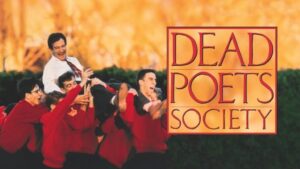
The Film: A Visual and Emotional Masterpiece
Dead Poets Society is set at the elite Vermont boys’ preparatory school, Welton Academy. The story follows shy student Todd Anderson (Ethan Hawke) and his roommates, who face pressures from their families and society. Their world changes when charismatic English instructor John Keating (Robin Williams) arrives.
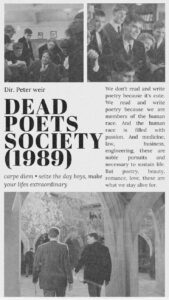
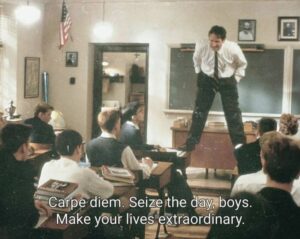
Keating uses unusual teaching techniques. He encourages his students to challenge authority, embrace their passions, and “seize the day” (carpe diem). He helps the boys revive the “Dead Poets Society,” a secret club where they read poetry, discuss dreams, and find comfort in self-discovery.
Robin Williams’ portrayal of John Keating is outstanding. Keating becomes an iconic character due to Williams’ performance, combining warmth, humor, and melancholy. John Seale’s cinematography adds to the narrative, showing Welton Academy’s calm yet stifling atmosphere.
The Book: Expanding the Narrative
Nancy H. Kleinbaum’s book provides a closer look at the characters’ inner lives. The book follows the movie’s premise but adds background information and analysis. Kleinbaum’s adaptation delves into the backstories of characters like Neil Perry (Robert Sean Leonard), who struggles with his father’s demands. More details about Todd Anderson’s inner struggles and his growth are also revealed. Readers gain a deeper understanding of the characters’ emotional struggles and personal development.
The novel captures the nuances of thinking and feeling, compensating for the film’s loss of visual and auditory impact. Kleinbaum’s script faithfully captures the film’s spirit, preserving Keating’s teachings and the boys’ self-discovery journey.
Themes and Legacy (Carpe Diem)
Both the film and book explore themes of uniqueness, nonconformity, and the transformative power of art and literature. They examine the tensions between fear and freedom, responsibility and passion, and tradition and innovation. The story celebrates the human spirit, its resilience, and inventiveness.
Dead Poets Society’s influence extends beyond its story. “Carpe diem” has become a cultural icon, inspiring many to pursue their passions and savor life. The movie has sparked discussions about teaching methods and the importance of encouraging students’ originality and critical thinking.
A beloved classic, Dead Poets Society remains available as a movie and book. Its examination of the human condition, supported by excellent writing and performances, ensures its continued relevance. Whether through the film’s visuals or the book’s insights, Dead Poets Society inspires viewers to seize the day and find their voices amid life’s noise.