Can The Wild Robot Become the Next How to Train Your Dragon?
Reference/ IndieWire
<The Wild Robot>, a DreamWorks animated film, has achieved a remarkable 97% on the Tomatometer and has even secured a nomination for the Academy Award for Best Animated Feature! This movie explores the intersection of technology and nature, is not just about its art style or family-friendly themes; it also offers a visual exploration of the importance of being with your kids and exploring those around you. In this review, I’ll talk about the movie and discuss what makes it so unique.
About the Robot
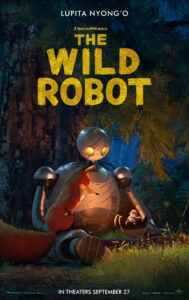
Roz is a typical robot, programmed to serve humans and execute tasks assigned by human. In spite of her efforts, she destroyed a Canada goose’s nest in an unexpected crash landing, leaving only one unhatched egg. Roz’s curiosity leads him to take on the task of preserving it. She adopts a robotic approach when the egg hatches, viewing it as another task to undertake before moving forward. Pressured by the surrounding animals and the gosling, she has no choice becomes its adoptive mother, learning how to feed it, teaching it to swim, and preparing it for migration.
Many viewers may see this transformation as Roz developing the ability to love. However, I also interpret it as a powerful metaphor for motherhood. Many women may not initially feel a strong inclination toward having children or fully understand parenting. But when they unexpectedly become mothers, they are forced to accept the challenges of raising a child. But the arrival of the child is another higher level of the challenge, and they may want to return to their pervious lives, but this can never be the same! Through researching, adapting to unfamiliar situations, and seeking advice from experts, they grow into their roles—just like Roz. Within the first hour of the film, the audience witnesses the birth of an emotional bond between Roz and Brightball, demonstrating that Roz is no longer just a machine; she has truly learned to love. And she gets power from love.
Reference/ IMDB
Nature vs. Technology
The film’s most noticeable contrast between high-tech robot and uninhabited island. Although Roz has a pure white appearance, she stands out in the vibrant green forest, making her a target for potential hostility. In the beginning, every animal regards her as a monster. As the time goes by, they become less hesitant and start to appreciate Roz’s kindness and motherly instincts, especially during the cold winter.
This transformation is not just emotional; it’s physical too. A beaver named Paddler crafts a wooden leg for Roz after her robotic right leg gets damaged. Her mechanical body reflects nature as it gathers scratches, moss, and signs of age over time. This remarkable symbolism beautifully illustrates the coexistence of technology and nature.
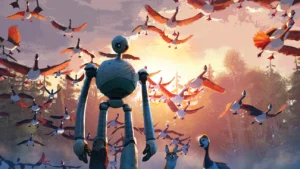
Moreover, the film presents the conflicts from both ends with particular scenes. The forest is invaded by robots searching for Roz, while on a different front, flocks of Canada geese battle to accidently invade species to human’s high-tech world. Both conflicts lead to significant losses for both sides, but ultimately, nature wills in the end. This message reinforces the idea that resilience and unity enable nature to thirve the pressures of technological encroachment.
Furthermore, the film surpasses straightforward distinctions by presenting conflict from both sides. The forest is invaded by robots who are trying to retrieve Roz, but a different scenario emerges as dozens of Canada geese attempt to break through and destroy invasive species on ice. The two battles end in significant losses, but nature triumphs in the end. This subtle, yet powerful message reinforces the idea that resilience and unity allow nature to thrive in the face of technological advancements.
Reference/ The Hollywood Reporter
Echoes of Totoro and Bambi
Visually, The Wild Robot adopts a distinctive blend of CGI and hand-drawn textures, creating an innovative “illustrated” aesthetic. Director Chris Sanders has drawn inspiration from Studio Ghibli’s My Neighbor Totoro and Disney’s Bambi, which is evident in film’s atmospheric and emotional backgrounds. Unlike traditional DreamWorks animations, this film embraces a more painterly and organic style, perfectly aligning with its central theme: kindness is a survival skill.
<The Wild Robot> is both entertaining and thought-provoking movie. This is not only like an educational meaning book for children but also a thank you letter for all the parents, which proves that love truly makes the world go round.
Directed and edited by Chris Sanders, known for How to Train Your Dragon, the film is based on a novel that is part of a trilogy. I believe fans can look forward to an exciting story with the potential to become the next big hit in animated movies!